 ™
™ 

The Raspberry Pi arrived in May. So did the microphone, the accelerometer, the gyroscope, the camera. The dining room table disappeared under a pile of hardware and hope.
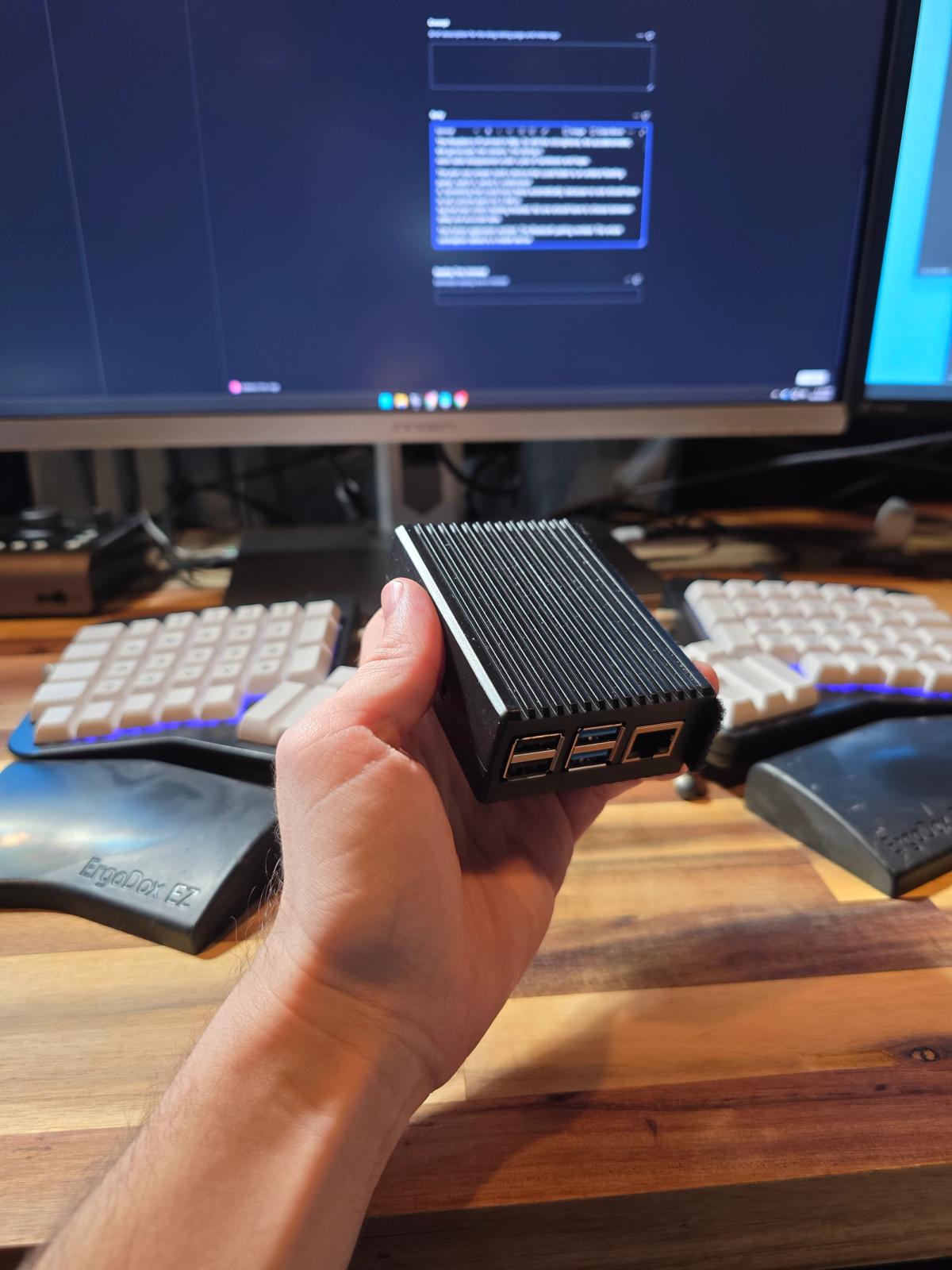
The plan was simple: build a device that could listen to an enteral feeding pump, watch it, sense it, understand it. Something that could track feeds automatically, because no one should have to set a phone alarm for 2 AM to log that a feed finished. No one should have to choose between sleep and accurate data.
The Python application worked. The Bluetooth pairing worked. The whole contraption talked to a mobile device exactly like it was supposed to. And then came the math on what it would cost to put one of these in every home that needed it.
The hardware alone made it impossible. Not impractical. Impossible. This was supposed to make life easier, not add another financial burden to families already navigating insurance authorizations and DME suppliers and formula shortages.
When the smart solution isn't the right solution
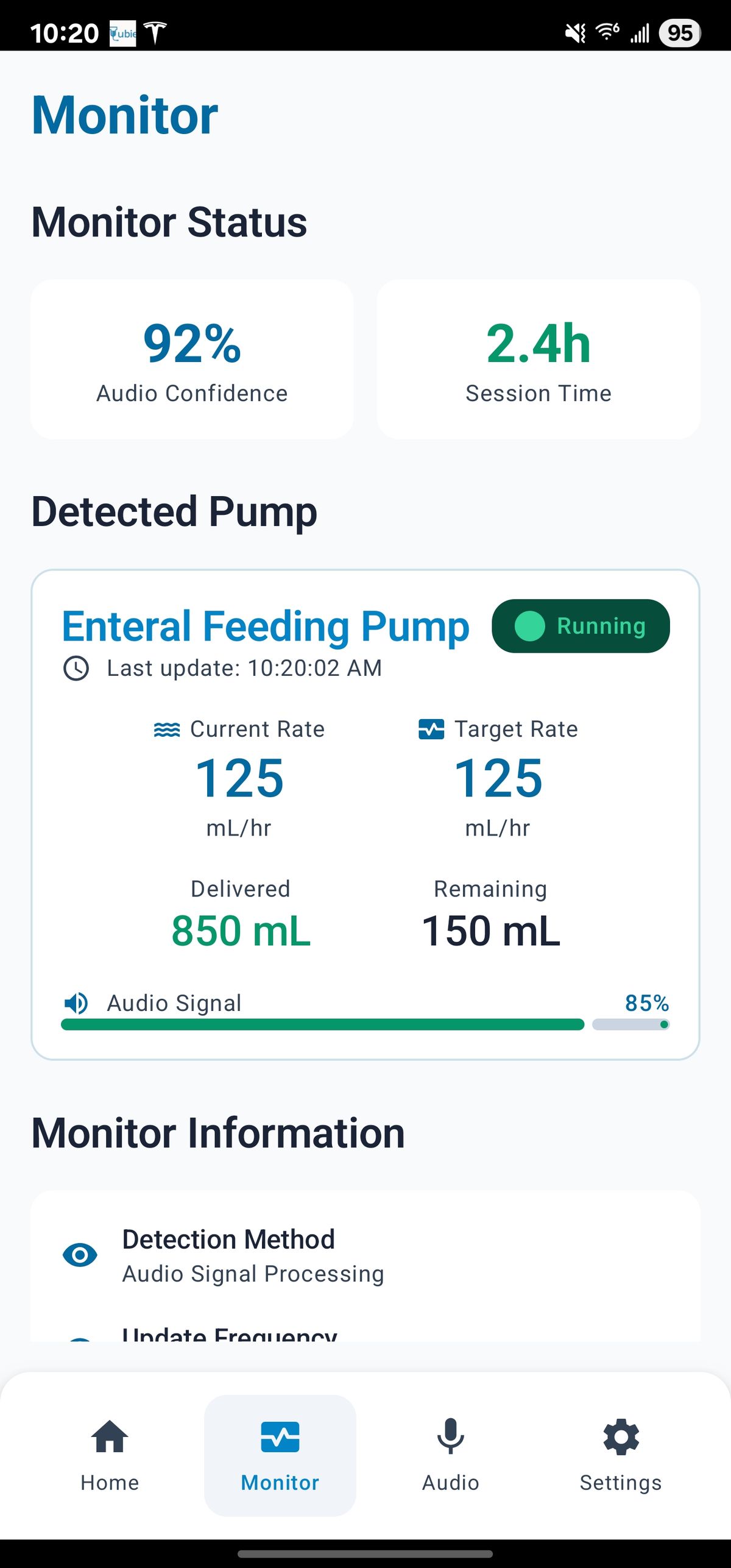
June brought a new direction: focus efforts on building the companion app. We began developing a machine learning audio classifier trained specifically on a Moog Infinity pump. The idea was beautiful in its simplicity. Your phone would just... know. It would hear the pump running, hear it finish, log everything automatically. Seamless. Invisible. The kind of technology that disappears into the background of life, which is exactly where medical device management should be.
The accuracy wasn't good enough. Not quite. Not reliably. Not across the variation of every pump, every microphone, every home environment. And the path to "good enough" meant testing and training models for every pump and microphone combination families might use. The development costs multiplied. The maintenance complexity multiplied. The timeline would stretch into years.
We were building something technically impressive that might never actually ship. That might work beautifully in a quiet room with one specific pump model and fail completely in a kitchen with siblings playing and a dishwasher running.
The pivot back to possible
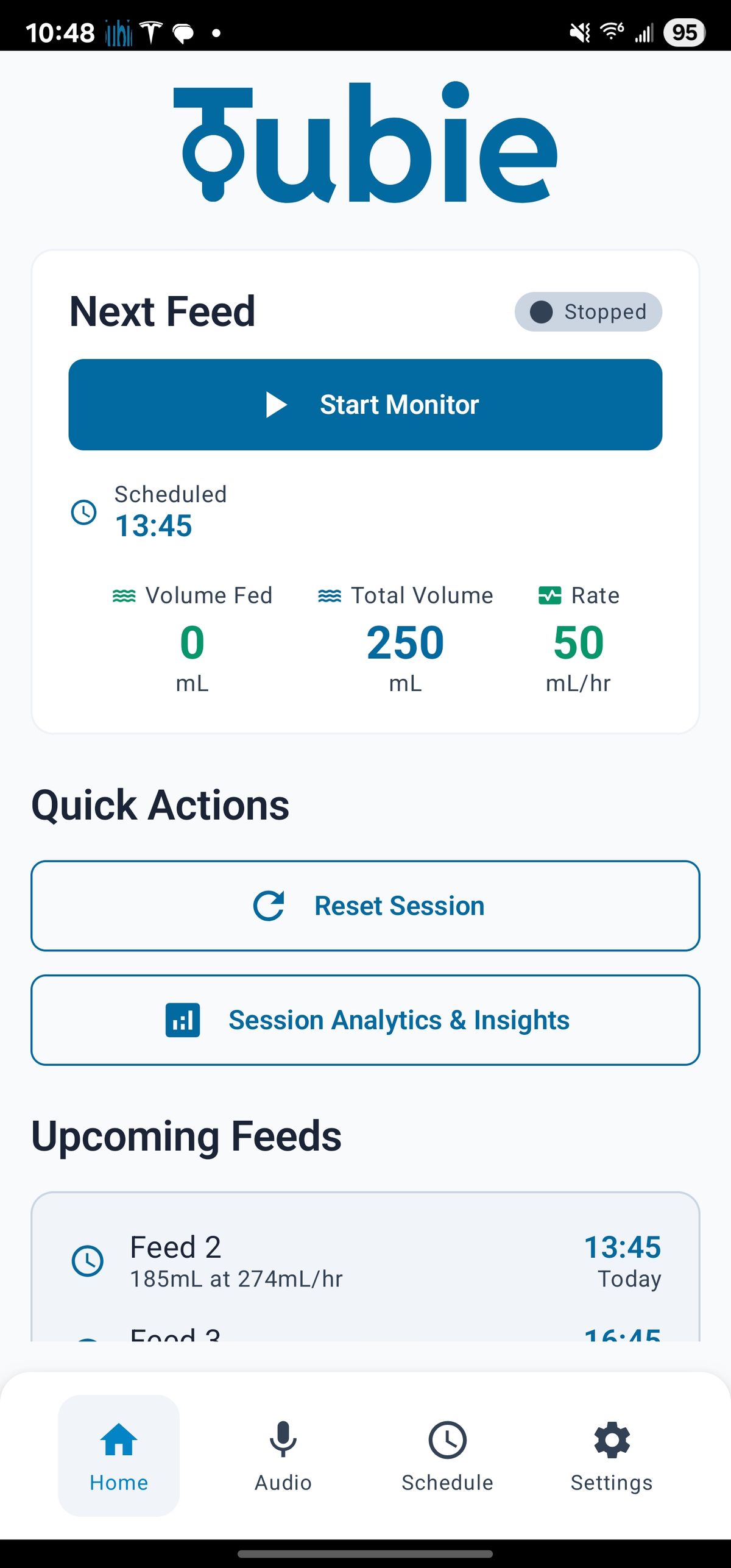
September meant starting over. Not from scratch, but from a different question: what if we stopped trying to automate the logging and started making the logging itself less burdensome?
The app development focused on UI, on flow, on reducing every unnecessary tap and swipe. The goal shifted from "invisible" to "invisible friction." What if the app anticipated what you needed to log based on your care routine? What if it remembered your usual formula volume and rate, so you weren't typing the same numbers six times a day? What if it made the manual part feel less manual?
By October, the architecture expanded to include a cloud backend. Not just for data backup, but for something more valuable: information sharing. Multiple caregivers. Multiple devices. School nurses who need to log afternoon feeds. Night nurses who need to see what happened during the day. Grandparents who want to help but need to know the routine.
The features being built now are the ones that emerged from listening to what families actually need, not what seemed technically impressive.
What shipped
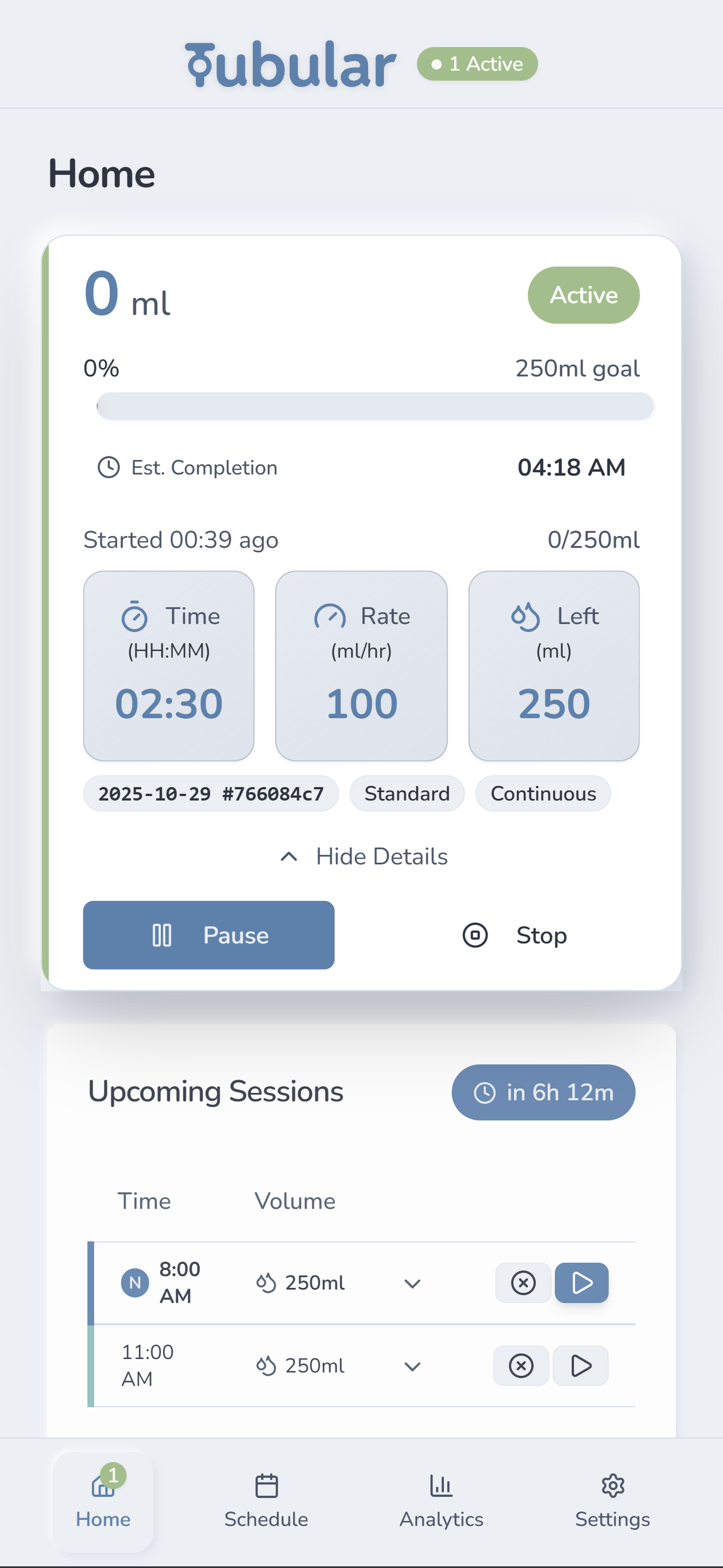
That simpler premise shipped. Tubular Daily Care is now available for iPhone and Android.
The journey from Raspberry Pi to cloud-based app wasn't about abandoning innovation. It was about finding the path between what's technically possible and what's practically deployable. Between what's clever and what's helpful.
There's still hardware on that dining room table, and the audio work didn't stay there. Tubular Plus can now listen for a Moog Infinity pump and log the feeds it's sure of. Sound is processed on your phone and never recorded or sent. It took shipping the simpler app first to get there.
If you're managing tube-feeding care for yourself or someone you care for, and you're tired of paper logs, alarm fatigue, and wondering whether Tuesday's feed finished at 3:17 or 3:27, Tubular Daily Care is available now. It will keep improving with feedback from the families and caregivers who use it.
Because the best technology doesn't announce itself with complicated hardware and impressive algorithms. It just makes Tuesday morning a little easier to navigate.
- Tubular Daily Care is available now. See how it works, or download it from the App Store or Google Play.